Identity security // platform analysis
WhatsApp Usernames: A Privacy Win With an Impersonation Problem
Hiding phone numbers closes a long-standing privacy gap. It also moves trust onto handles that can be copied, misspelled, and abused.
Key finding
Privacy and authenticity are different security properties
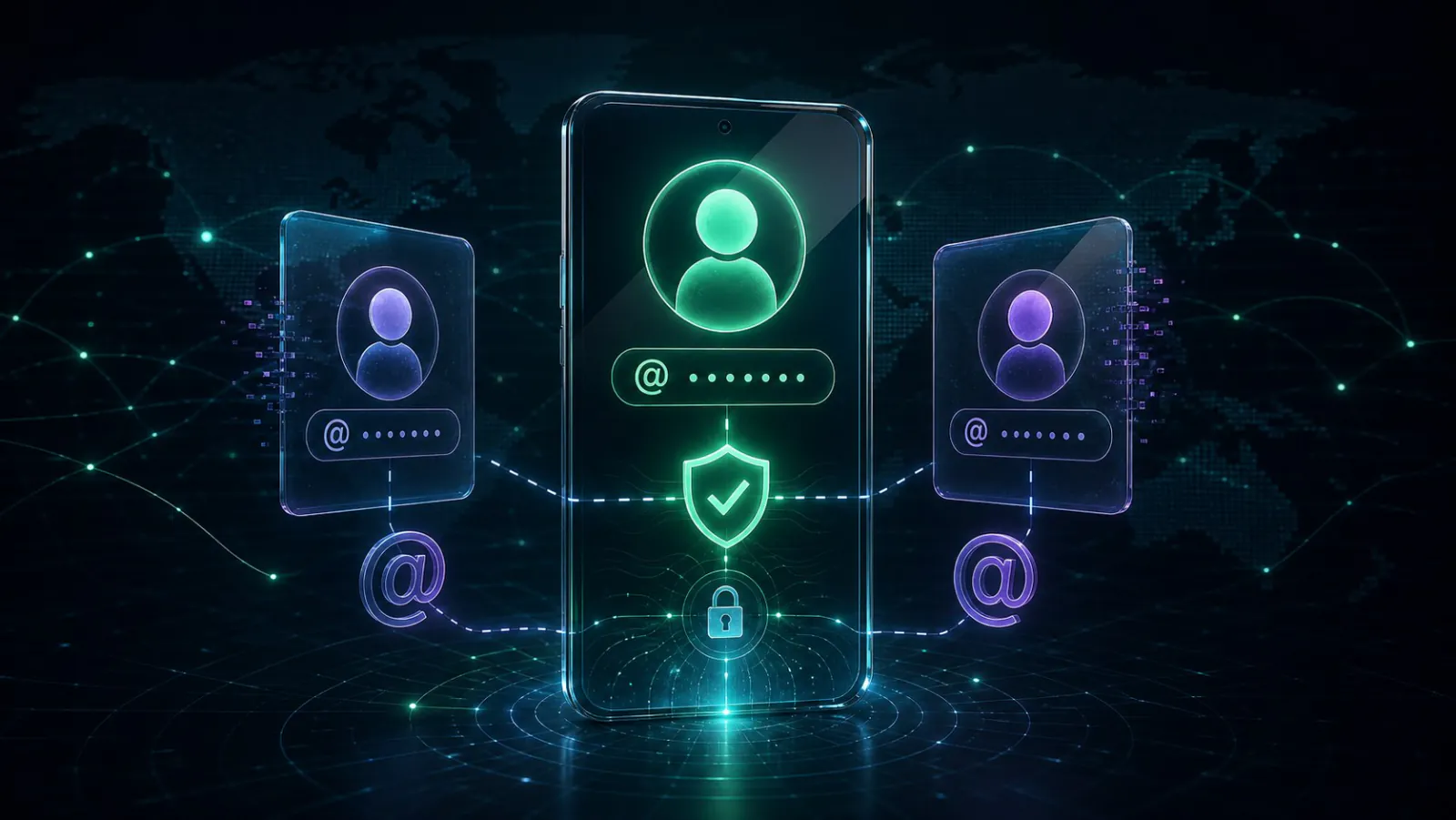
WhatsApp usernames can keep a phone number private from new contacts. A username, however, is only a routing label. Unless the platform or recipient verifies who controls it, a convincing lookalike can still borrow the trust of a bank, public official, celebrity, employer, or family member.
01 // The rollout
What WhatsApp is launching
On June 29, 2026, WhatsApp began gradually opening username reservations before username-based messaging launches later this year. The optional feature will let people find and contact an account by a unique handle rather than exchanging a phone number. WhatsApp still requires a phone number when an account is created; the change controls what a new contact can see.
Handles must contain between three and 35 characters. WhatsApp says there will be no public directory, autocomplete suggestions, or browseable index. A person must know the exact username. Users can also create an optional username key—a separate secret a new contact needs before sending a message.
For creators, businesses, and organizations, Meta offers a route to claim an existing Facebook or Instagram username. WhatsApp says it is withholding names associated with celebrities, government entities, and other prominent targets.
Sources: Meta's official announcement, TechCrunch, and Associated Press.
02 // The benefit
Why usernames are a real privacy improvement
Phone numbers are unusually persistent identifiers. They are tied to mobile carriers, recovery workflows, data-broker records, and sometimes financial accounts. Sharing one with a marketplace seller, event attendee, group member, or prospective client can reveal more than the user intended. It may also create an opening for targeted phishing, harassment, SIM-swap preparation, or account-recovery abuse.
A changeable username creates separation between communication and the telephone network. It lets someone start a conversation without handing over an identifier used across unrelated services. This is valuable wherever trust is still developing.
The change does not weaken end-to-end encryption. Encryption protects message content; usernames address contact discovery. Neither one proves who is at the other end.
03 // The risk
How lookalike handles create an impersonation surface
Exact usernames may be unique, but human perception is forgiving. A scammer does not need the official handle if a victim accepts a plausible variation containing words such as "support," "official," "verify," or "team." Punctuation changes, reordered words, visually similar characters, copied profile photos, and a familiar display name can make a false identity feel legitimate.
Early testing reported that several handles resembling Indian politicians, actors, companies, and public institutions remained available. Meta says it reserves high-profile names and some variations, but has not described the complete matching rules. A blocklist can protect known targets while missing local organizations and new spellings.
| Control | What it helps prevent | What it does not prove |
|---|---|---|
| Exact username | Accidental contact with a different exact account | That a similar-looking handle is authentic |
| No public directory | Casual browsing and bulk discovery | That a handle shared in an ad or message is legitimate |
| Username key | Cold messages from people missing the secret | The identity of someone who obtained that key |
| Cross-Meta claim | Some exact-handle squatting | Every variation or off-platform identity claim |
04 // Regulation
Why India asked WhatsApp to pause
India is WhatsApp's largest market and already faces widespread messaging-based fraud, including fake police investigations, bank impersonation, phishing, and so-called digital arrest scams. On July 1, India's Ministry of Electronics and Information Technology reportedly gave Meta three days to explain the feature and asked WhatsApp not to continue its Indian rollout until consultations were completed.
The notice argued that hiding a sender's number while allowing institution-like handles could increase impersonation and make bad actors harder for ordinary users to assess. It cited Indian laws addressing identity theft and personation.
Digital-rights advocates raised a separate concern: fraud risk does not automatically give the executive unlimited authority to redesign a product through private correspondence. Both positions identify real governance problems. Platforms need enforceable safety duties, while restrictions affecting millions of users should have a clear legal basis, transparent evidence, and proportionate scope.
Regulatory reporting: Moneycontrol's account of the MeitY notice and Internet Freedom Foundation's response.
05 // Legal context
The Telegram judgment is relevant—but not a verdict on WhatsApp
A June Delhi High Court judgment concerning Telegram has entered this debate because it observed that username-based operation can conceal identifiers and help information move quickly. The case involved alleged examination fraud, large public channels, bots, mirror groups, file sharing, and editable messages. The court upheld a temporary, event-specific restriction.
That finding should not be transplanted mechanically. WhatsApp's architecture and discovery controls differ. The judgment shows that Indian authorities consider platform design relevant to fraud; it does not make usernames inherently unlawful.
Primary legal source: Delhi High Court judgment in Telegram FZ LLC v. Union of India.
06 // Defensive guidance
How users and organizations should respond
For individual users
- Reserve deliberately. Use a private, hard-to-guess handle if discoverability is not your goal, and enable the optional username key.
- Verify through another channel. For money, sensitive data, employment requests, or emergencies, call a number already saved or visit the institution's official website.
- Read every character. Do not rely on the profile photo, display name, biography, or an "official"-sounding suffix.
- Reject urgency and secrecy. Legitimate banks and authorities do not need your OTP, screen-sharing access, or immediate transfer to a "safe" account.
- Block and report. Preserve screenshots and transaction details when fraud is attempted, then use WhatsApp's reporting tools and appropriate local cybercrime channels.
For businesses and public institutions
Reserve the canonical handle early, claim linked Meta identities where appropriate, and publish the official WhatsApp username on a controlled website. Monitor high-risk variations, document a rapid impersonation-reporting process, and teach staff never to approve payments solely through a new messaging identity.
07 // Better safeguards
What a trustworthy username system should add
Protected-name lists are necessary but insufficient. WhatsApp should combine exact reservations with homoglyph detection, fuzzy matching, meaningful verification for institutions, a documented appeals process, rate limits for unsolicited first contacts, and stronger friction around payment or credential requests from new accounts.
First-contact screens should clearly separate a chosen display name from a verified identity and show useful context such as account age or arrival through an official business link. Meta should publish impersonation reports, response times, repeat-abuse rates, and the coverage of protected entities.
08 // Quick answers
Frequently asked questions
Do usernames replace phone numbers?
No. A phone number remains necessary to register. Enabling a username can keep it hidden from people contacting you for the first time through the handle.
Are usernames searchable?
WhatsApp says there will be no directory or suggestions. A person needs the exact username, and an optional username key can add another contact barrier.
Is the feature unsafe?
Not inherently. It improves identifier privacy. Its safety depends on how well WhatsApp controls lookalikes, verifies high-risk identities, limits unsolicited outreach, and responds to abuse.
09 // Conclusion
Hide the number, but verify the person
WhatsApp usernames solve a genuine privacy problem. People should not have to reveal a durable telephone identifier simply to join a group or begin a conversation. Yet removing a familiar identifier also removes one of the imperfect cues users relied upon when judging who was contacting them.
The answer is not to abandon usernames. It is to design identity assurance alongside privacy: safer defaults, better lookalike detection, visible provenance, measured enforcement, and public accountability. Until those systems mature, the safest habit is wonderfully old-fashioned—verify important requests somewhere other than the message that made the request.
Sources & methodology
Primary and corroborating references
- Meta — official WhatsApp username announcement
- TechCrunch — username reservation details
- Associated Press — independent launch coverage
- Moneycontrol — reported MeitY notice
- Delhi High Court — Telegram FZ LLC v. Union of India
- Rest of World — platform trust and impersonation fraud context
Editorial method: Product behavior is sourced to WhatsApp and independently corroborated reporting. Regulatory claims are attributed to reporting on the notice. The Telegram judgment is treated as analogous legal context, not a decision about WhatsApp. Security recommendations distinguish contact privacy, account authentication, and real-world identity verification.